Cyclones are, by far, one of the most destructive natural hazards that cause tremendous annual losses in lives and property. It can cause significant phenomena which can harmfully, and in some cases, favourably impact on communities, society and the environment. The main effects of tropical cyclones include heavy rain, strong winds and large storm surges at landfall. Storm surge or otherwise known as coastal inundation by seawater, are lesser known occurrences but can be the most dangerous element of a cyclone. However, the damage inflicted by a tropical cyclone is dependent mainly on its intensity, size and location.
Cyclones generally have negative impacts upon the environment. The impacts tropical cyclones have on the environment include loss of habitat, changes to the biodiversity levels, erosion, effects on water quality. Tropical cyclones are known to bring destructive winds, and heavy rain with flooding which creates storm surges, causing inundation in low-lying areas. However, the most common features of a tropical cyclone is destructive winds and heavy rainfall that can lead to flooding. The most dangerous element of a cyclone that poses the most threat to the environment is its strong gusts of winds. These winds of a cyclone can cause widespread damage to the environment as it can throw rubble and debris everywhere, which can cause damage to trees, habitats and can affect sewerage and sanitation systems. The destructive winds that accompany tropical cyclones are also capable of causing serious erosion and wiping out all vegetation and forestry. Another potentially dangerous hazard associated with tropical cyclones is storm surges or coastal inundation. A storm surge is an abnormal rise of water due to a tropical cyclone, and is caused by a combination of strong winds forcing water onshore and the lower atmospheric pressure in a tropical cyclone. If the storm surges occur simultaneously with the high tide, the area affected is quite often extensive. Heavy rain can create severe impacts by causing floods, mudslide and landslides. Once tropical cyclones move inland, they often degenerate into rain depression. This drops heavy rain onto regions and causes floods. Since tropical cyclones form over warm tropical waters, they tend to contain enormous amounts of moisture and can produce heavy rainfall over extensive areas. Although this rain may be beneficial to otherwise dry regions, in Australia, too much can cause flooding. This flooding can wreak havoc over vast areas, as it can inundate land, isolate communities and destroy infrastructure. Social Impacts
Tropical cyclones also leave behind many social impacts, particularly on the people directly affected. Cyclones can claim lives and often, many people are harmed as a consequence of storm surges, destructive winds and flooding. Few homes remain intact after tropical cyclones, causing many individuals to suffer from nightmares, traumatized by the disaster. In some severe cases, victims of the disaster may be susceptible to psychological stress, depression and mental illness, as a result from having lost loved ones and property, and the events that unfold during the aftermath of the cyclone. Economic Impacts Tropical cyclones can have economic effects on society. They are one of the most financially-damaging natural disasters, costing the Australian economy hundreds of millions of dollars in property damage and insured losses. On top of this, transportation and communication infrastructure may have been destroyed, thus hindering clean-up and rescue efforts. The worst cyclones of Australia have caused billions of dollars of damage and many fatalities. Such expenses needed to repair the destruction caused by the cyclone would ultimately send the country’s wealth and economy into turmoil.
| 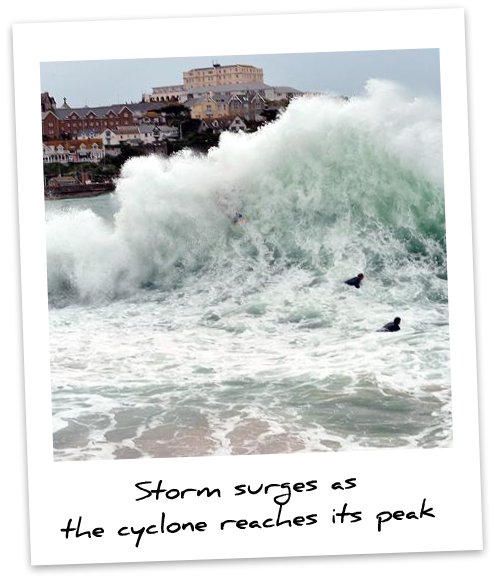 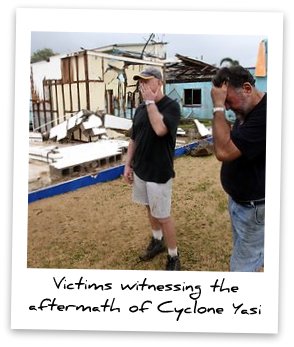 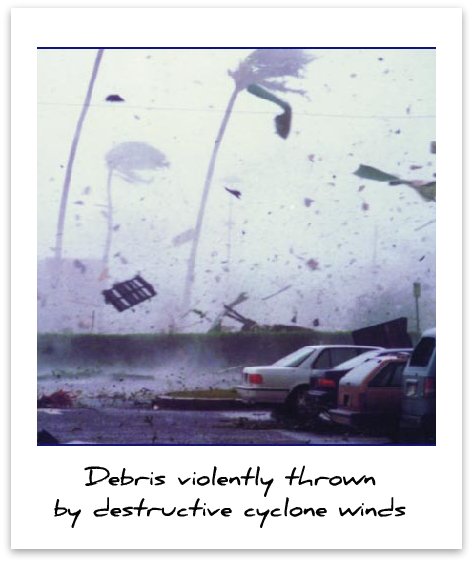 |
Table 1. Damage Index: relationship between physical damage and damage costing where the repair cost is expressed as a proportion of the value of the property.
Damage Index (physical) | Damage Index (cost) % |
Negligible | 0 |
Missile to cladding/window | 20 |
Loss of half roof sheeting | 50 |
Loss of all roofing | 70 |
Loss of roof structure | 90 |
Loss of half of outer walls | 100 |
Loss of all walls | 100 |
Loss of half floor | 100 |
Loss of all floor | 100 |
Collapse of floor supporting piers | 100 |
Figure 3. Damage Index (DI) relating to residential building damage (proportion of population value based on repair cost; see table 1.) by region/township impacted by Tropical Cyclone Larry.

Figure 5. Impact of Tropical Cyclone Larry on selected industries’ output: government assistance scenario (% deviation from forecast) (Mullaly and Wittwer 2006)

Statistics courtesy of: http://www.ga.gov.au/ausgeonews/ausgeonews200609/larry.jsp
